

Monitoring Athlete Fatigue and Recovery - Considerations For The Hockey Athlete
(Preface: Eoin is currently completing Masters research, and is looking specifically for coaches who work with athletes to fill out a brief survey to help him out with his data collection. As anybody who's done their own research or been involved in research knows, that data collection can sometimes be challenging, so if you have a few minutes fill out Eoin's survey for his research. To provide context, I asked Eoin to write in article giving some context into his research project. Enjoy).
In elite sports, data science has become a cornerstone of any high-performance setting. There are numerous tools and systems to help coaches collect data that can be used to optimize their athletes training. This has perhaps become more important as the competitive demands placed on athletes increases.
The 82-game NHL regular season is a good example of how busy a professional season can be, and the challenges that pose for staff to manage injury risk and player availability. In response to this, sport science research has turned to investigating ways to monitor athlete's fatigue, recovery, and adaptation to seek an understanding of athlete's recovery status and optimize their training and game-readiness. This body of research has grown in the team-sport setting but unfortunately studies carried out with ice hockey athletes are lacking.
To that end, this article seeks to summarize current research in methods of monitoring athletes using subjective ratings and physical tests and draw attention to some important considerations for coaches working with hockey athletes. In addition, I would like to invite readers to take part in a survey that forms part of my own research in monitoring fatigue and recovery in pro hockey players.
What is Athlete Monitoring?
The goal of athlete monitoring is to take repeated measures to help guide decision-making. This can mean knowing when to push athletes as well as when to pull back and focus on recovering.
Methods of monitoring fatigue and recovery are generally separated into two categories: objective and subjective measures to assess internal and external load. Training and competition place a load or demand on the athlete and the load experienced is reflective of the interplay between internal and external factors. External load is the work the athlete completes, such as distance covered, and is independent of the athlete's internal characteristics. Internal load then is influenced by the external load and reflects the physiological strain experienced by the athlete.
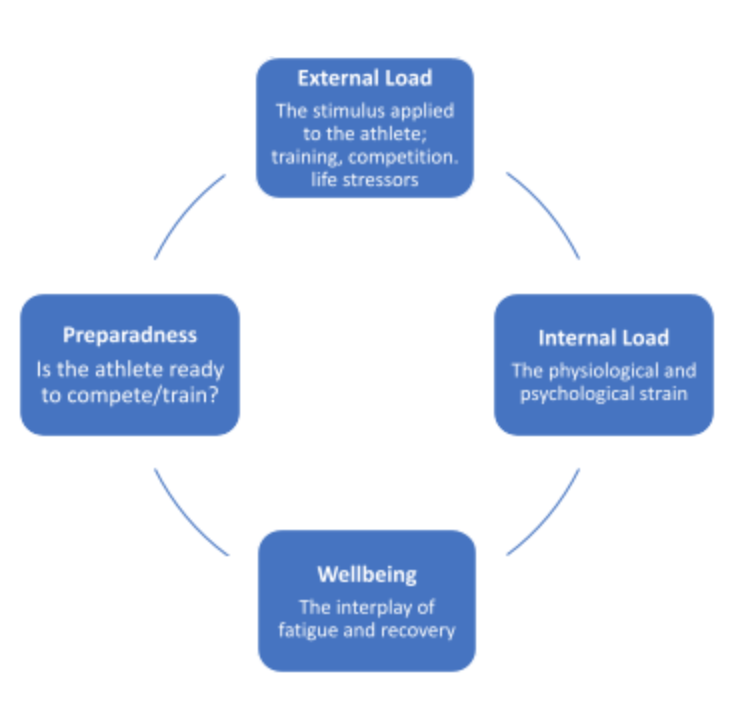
(Editor's Note: We've covered what internal and external load are in this webinar series from Dr. Steve McGregor)
When considering methods to monitor fatigue status, we consider whether the load is internal or external and whether the measure being used should be objective or subjective. The table below provides examples of tools to assess fatigue and the categories they may be organised into. External load influences the internal load and so it is good practice to monitor both subjective and objective markers to capture recovery status.
|
|
Objective Measures |
Subjective Measures |
|
Internal Load |
Heart rate indices, hormonal, biochemical, and immunological assessments. |
Athlete self-report measures: E.g. POMS, REST-Q, TQR. Wellness questionnaires, rate of perceived exertion (RPE), session- RPE |
|
External Load |
Physical performance tests etc, neuromuscular function e.g. Vertical jump tests, joint flexibility and range of motion, |
Coach's observation of players |
A plethora of markers and monitoring tools are available for staff and practitioners to evaluate if athletes are in a state of fatigue or recovery. A review paper by (Thorpe et al. 2017) highlighted methods of monitoring fatigue status in team sport athletes and the considerations that should be made when selecting appropriate measurement tools. For example, tools should be easy to administer and should be non-invasive and should limit additional loading on the athlete. Any fatigue assessment that is used should be non-exhaustive and simple to employ for it to be used frequently during competition and on a day-to-day basis. It should not be a burden. To paraphrase Lorne Goldenberg from his recent Pro Hockey Strength podcast; ‘'data collection is fine, but most sport scientists don't know what to do with the data and the art and science of coaching gets left behind in the effort to collect the best data''. Therefore, to make a monitoring system feasible, we should aim to collect only pertinent data to help us make informed decisions and in a way that has the least impact on the players.
What and How to Monitor
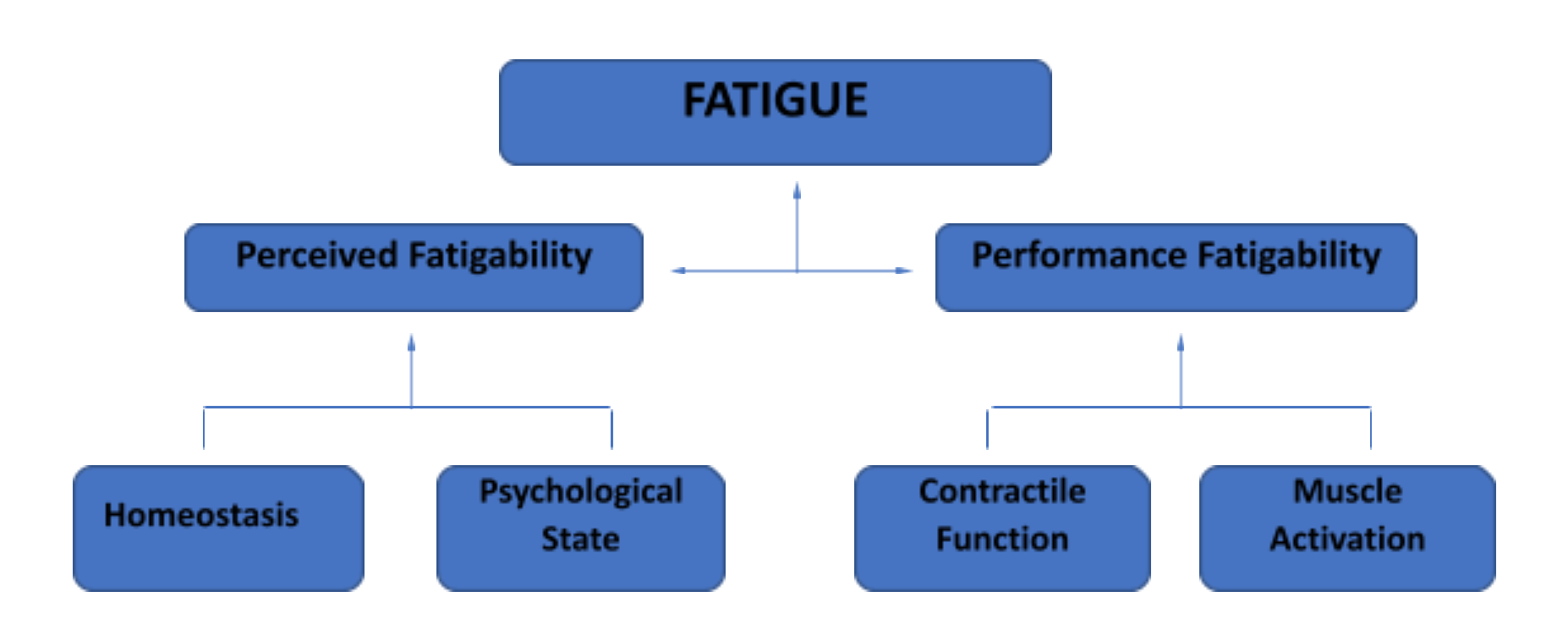
(Enoka and Duchateau 2016) proposed the above taxonomy that may be very useful in deciding what methods you choose to monitor your athletes. For example, if we want to get a sense of how our players are perceiving their fatigue and recovery status, we may opt to implement athlete self-report measures. The taxonomy would advise that to assess perceived fatigability we need to take into account homeostasis and psychological factors. Therefore, a questionnaire delivered to athletes should try to quantify subjective measures of the athlete's mood, motivation level, pain or soreness, feelings of fatigue, sleep quality and perhaps hydration status. If we want to assess the athlete's physical status then, we will need to consider the factors affecting performance fatigability. This will need to take into account the athlete's contractile function and muscle activation. Several maximum-effort performance tests have been used in team-sport athletes to assess performance recovery, such as sprint protocols, maximum voluntary contractions (MVCs) and metrics derived from jump performance. Here, some consideration should be taken as minimizing any additional loading on the athlete is essential to make implementing these assessments practical on a daily or weekly basis (Thorpe et al. 2017).
Subjective Measures
Athlete self-report measures (ASRM) may be the most widely used method of monitoring athletes. A survey by (Taylor et al. 2012) identified ASRM as the most commonly used method to assess athlete's recovery status (84% of respondents) in high-performance sport in New-Zealand and Australia. They may also be highly responsive to acute and chronic training load. A systematic review by (Saw et al. 2016) found that subjective markers (including mood, stress) were more consistent and demonstrated greater sensitivity to acute and chronic training load than objective measures (including measures taken at rest and during exercise). In elite soccer players, ratings of perceived fatigue fluctuated in correlation with fluctuations in high-speed running distance over the previous 2 (r = -0.31), 3 (r = -0.42) and 4 (r = -0.28) days, indicating the sensitivity of the subjective measures to variation in training loads. ASRMs also have a great advantage in how intuitive they can be for the athlete and time-efficient to implement. It is important to consider however that they are highly individual and not standardized between individuals. Data should therefore be interpreted with this in mind, so that individual changes in subjective measures are compared only to that individual and not the group. It is beyond the scope of this article to explore methods of analyzing this type of data, but Adam Virgile and Joel Jackson have both put out some great information on how this can be managed using z-scores.
Many questionnaires comprise a handful of questions that allow athletes to rate where on a Likert scale they perceive they are, the scores are then summated to give an overall wellness score. The two examples I am most familiar with are those proposed by (Hooper et al. 1995) and (McLean et al. 2010) which use a 7-point and 5-point scale respectively. The below has been validated extensively in the literature as an adaptation of the Profile of Mood States questionnaire (POMS).
|
|
1 |
2 |
3 |
4 |
5 |
Score |
|
Fatigue |
Always tired |
More tired than normal |
Normal |
Fresh |
Very fresh |
|
|
Muscle Soreness |
Very sore |
Increase in soreness/tightness |
Normal |
Feel good |
Feel great |
|
|
Sleep Quality |
Insomnia |
Restless sleep |
Difficulty falling asleep |
Good |
Very restful |
|
|
Stress |
Highly stressed |
Feeling stressed |
Normal |
Relaxed |
Very relaxed |
|
|
Mood |
Highly annoyed/irritable/down |
Snappy with team-mates, family, friends |
Less interested in others/ activities |
Generally good mood |
Very positive mood |
|
Monitoring Neuromuscular Status
Neuromuscular fatigue may be assessed using maximum voluntary contractions, jump protocols and maximum effort sprinting to detect changes in muscle performance. We'll discuss the use of these measures and considerations for their use in the hockey athlete.
Maximum Voluntary Contraction (MVC)
Monitoring athlete's ability to produce force can take a snapshot of their recovery status and may also provide an indication of injury risk. Recently, the use of an adductor squeeze test has been studied in athletes from several team-sport backgrounds including ice hockey, soccer, rugby codes, Gaelic Games and Australian football (Emery and Meeuwisse 2001; Crow et al. 2010; Delahunt et al. 2011a; Delahunt et al. 2011b; Light and Thorborg 2016; Roe et al. 2016; Delahunt et al. 2017; Wollin et al. 2018; Tiernan et al. 2019; Wörner et al. 2019; Oliveras et al. 2020). Findings from these studies indicate that adductor muscle strength is compromised preceding groin strain injuries (Crow et al. 2010) and adductor muscle strength is reduced following training and match play and a link has been established between distance covered and magnitude of adductor strength decrease (Roe et al. 2016). A relationship has also been identified between athlete's perceptual measures and decreases in adductor strength (Wollin et al. 2018; Tiernan et al. 2019). Our own research has found similar decreases in adductor strength after ice hockey gameplay.
Monitoring adductor strength may be a very useful tool to capture fatigue and recovery status in hockey players and in addition, help inform injury potential - ticking two boxes in a monitoring system.
Accounting for between 43 and 80%, adductor strains make up a large percentage of non-contact injuries in the hockey athlete (Mölsä et al. 1997; Emery and Meeuwisse 2001).
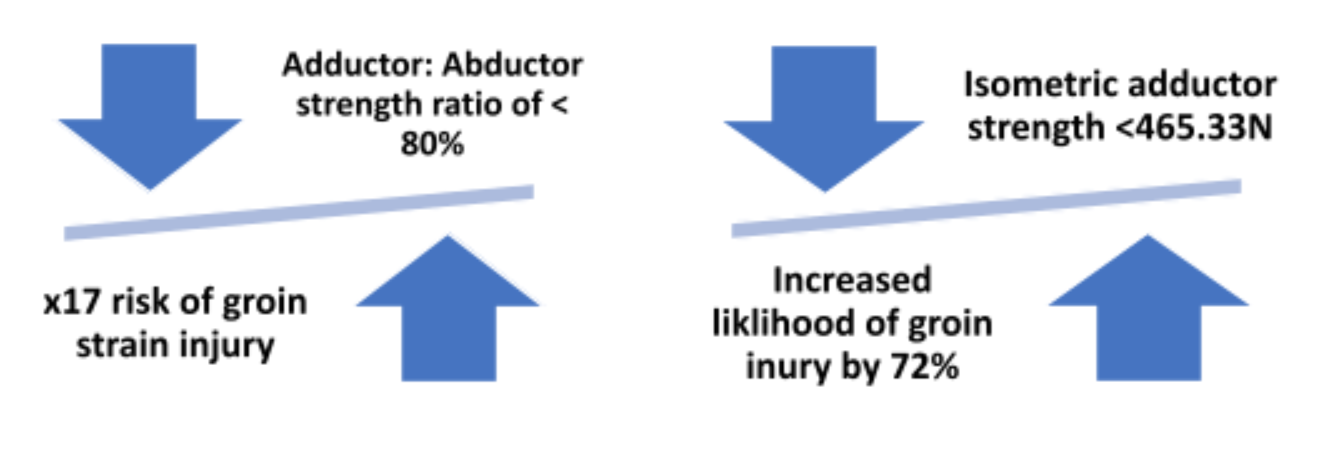
A study in a sample of elite soccer players highlighted the importance of groin strength - isometric adductor strength of less than 465.33N was found to increase the likelihood of groin injury by 72%, and relative adductor strength of less than 6.971N/kg increased the probability of injury to 83%.
There are several options available to assess adductor muscle strength, the most common being groin squeeze tests in 0, 45 and 90 degrees of hip flexion. All have been shown to be reliable, in both long (distal placement of test device) and short-lever (proximal placement of test device) positions and using a variety of measurement devices including hand-held dynamometry and a sphygmomanometer (Fulcher et al. 2010; Delahunt et al. 2011a; Delahunt et al. 2011b). I have found using a 5-second groin squeeze protocol to be very time-efficient, taking less than 1 minute per player. It is also cost-effective requiring minimal equipment. Of course there are some great equipment options out there like the GroinBar from Vald that can streamline testing groups of players.
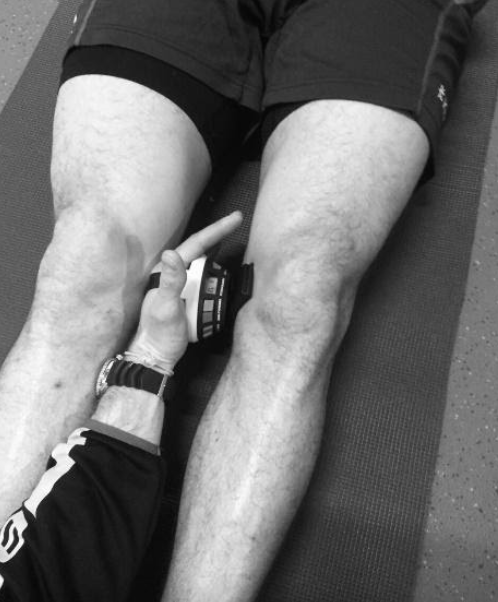
Groin squeeze test using hand-held dynamometry in the 0? hip flexion short-lever position (HHD placed at knee joint).
With regard to the metrics we might use; absolute force may be used to detect fatigue-related changes and the adductor: abductor strength ratio has been identified as an indicator for the risk of adductor strain injury.
Pre-season hip strength testing in NHL players found that those with adductor strength of less than 80% of abductor strength were 17 times more likely to sustain an adductor muscle strain (Tyler et al. 2001).
Interestingly, a recent study in Swiss professional hockey players found that those with hip/groin pain during hip adduction and abduction had similar hip abductor strength as players with no pain but lower hip adductor strength and thus adductor : abductor strength ratio (Oliveras et al. 2020). In elite junior Australian football, reductions in adductor strength ranging from approximately 5 to 12% preceded the onset of groin injury (Crow et al. 2010) and post-match isometric adductor strength reduction of > 12.5% and > 15% were clinically meaningful in youth soccer players. Further research is needed to identify fatigue-related reductions and the time-course of recovery in ice hockey players and our current research is looking into this.
Jump Assessments
The nature of hockey gameplay requires a lot of sprint skating, rapid and frequent changes of direction and a lot of contact. Players may cover 11% of total distance by sprinting, performing an average of 7 high-intensity bouts of skating per minute and 5 body checks per period of play (Brocherie et al. 2018; Lignell et al. 2018). The powerful accelerations and decelerations and concentric and eccentric contractions associated with these actions contribute to the development of neuromuscular fatigue.
Player's neuromuscular status is commonly assessed using vertical jump protocols such as the squat jump (SJ) and countermovement jump (CMJ) to measure the recovery of neuromuscular function.
The CMJ is widely used and is a popular method of assessing lower body power and as a global measure of neuromuscular fatigue but research has raised the question of whether jump height is sensitive enough to detect neuromuscular fatigue. In addition, athletes may manipulate their technique to reach a desired jump height.
This is an important consideration when deciding what variables to assess in jump-derived data. 18 neuromuscular variables collected using CMJ reduced immediately in response to a high-intensity fatigue protocol in college team-sport athletes; eccentric, concentric, and total duration, time to peak force/power, and flight time contraction-time ratio were found to be suitable to detect acute neuromuscular fatigue (Gathercole et al. 2015).
Research in Australian Football League players had similar findings and identified CMJ flight time : contraction time as the most useful variable to monitor neuromuscular status (Cormack et al. 2008). We should not rule out simple measures of jump height yet, however. Jump height is widely used to assess performance changes and in several studies assessing fatigue it was sensitive enough to detect acute changes in response to competitive games (Ronglan et al. 2006; Johnston et al. 2013; Twist and Highton 2013).
A meta-analysis of the use of counter-movement jumping to monitor neuromuscular fatigue found that average jump height was more sensitive in assessing fatigue than using peak jump height (Claudino et al. 2017). Future research specific to hockey players is needed to identify which variables are sensitive to fatigue-related changes in jump-derived neuromuscular variables during games and across training weeks.
Sprint Performance
Another feasible monitoring tool is using short-distance sprints. Shorter distances impose less load on the athlete making it feasible to implement regularly and gives us coaches insights into the athlete's physical functioning.
10 - and 20 – meter sprint times were shown to be useful to detect fatigue in elite female handball players during a training camp and international tournament, with significant increases in sprint time associated with a 3% performance decline. Cycle ergometer sprinting was used to monitor neuromuscular fatigue after Australian rules football match play. Fatigue was detected through changes in peak power during two 6 second sprint efforts. Declines in peak power were recorded at 1 (ES = 0.49), 24 (ES = -0.85), and 48 h post-match (ES = 0.44) (Wehbe et al. 2015).The authors actually used the sprints alongside CMJ performance in a novel method to assess fatigue.
Specific to hockey; on-ice sprint tests were evaluated for reliability including a top-speed effort test, and acceleration test and a repeated-effort sprint. All three tests were deemed reliable, with excellent within- and between-day reliability (inter-class correlation coefficient ≥ 0.83, typical error ≤ 2.6%) as well as within- and between-rater reliability (ICC ≥ 0.86, TE ≤ 0.5%), making them good choices to monitor fatigue-related changes in hockey players in a sport-specific test (Bond et al., 2018)
Flexibility and Joint Range-of-motion (JROM)
Athletes may experience reductions in flexibility and ROM post-training and competition. The multi-directional demands of team sports and eccentric contractions that tax the neuromuscular system can cause muscle damage. This can manifest as muscle soreness and tightness and may lead to increased injury risk.
However, we should bear in mind that adductor and abductor flexibility were not associated with increased hip injury in NHL players (Emery and Meeuwisse 2001; Tyler et al. 2001). Significant reductions in hamstring length were noted in semi-professional soccer players after a fatigue protocol and was associated with altered sprint kinematics and impaired sprint performance (Small et al. 2009). (Mohr et al. 2016) noted reductions in knee JROM (5-7%) at 24 and 48 hours post-soccer match play and this was associated with increased ratings of muscle soreness.
In youth soccer players, hip flexibility assessed using a bent-knee fall-out test was reduced significantly in both hips post-match play and this reduction in JROM occurred alongside reductions in adductor strength (Paul et al. 2014). It seems therefore that monitoring flexibility and JROM in athletes offers insight into reduced physical functioning and associated strength impairments and muscle soreness. Assessments of JROM are quick, impose no additional load on the athlete and can fit well into a monitoring system alongside subjective measures and MVCs to give an indication of injury risk. More specific research is needed however to determine sensitivity to changes in training load and time-course of recovery in ice hockey players.
Practical Applications
When deciding what assessments to use to monitor their athletes, coaches and staff should use the current research and their own experience of their athletes and their training environment. Knowing what is practical and feasible in your environment is essential to a good monitoring system and for athlete buy-in. Some tools can be implemented seamlessly in some environments and less practically in others. Fundamentally, the decision should be made if the goal of monitoring your athlete's is to manage injury/illness risk, improve performance, or monitor training adaptation/maladaptation. The focus of monitoring may change at different stages of the season and that is fine - in fact it is good as it shows the monitoring approach is flexible to support your goals at that time. A multi-disciplinary approach from coaching and training staff may be optimal and help to establish KPIs. Coaches and staff should bear in mind what injuries they tend to see most often and what assessments might give more insight into that injury risk. To be successful, the monitoring tools used should fit into the athlete's training schedule and cause minimal additional loading. A good monitoring system should also use a combination of objective and subjective measures to help interpret changes in athlete's recovery status. The goal of monitoring should always be to support coaches in making decisions – not complicate decision making.
Finally, I would appreciate you taking the time to take part in a research survey for my own research – it takes approximately 5 minutes on average. The survey seeks to gather information from coaches about their current monitoring practices with their hockey athletes. The data collected will be used in the writing of a Master's thesis. You can access the survey by clicking HERE, scanning the QR code below or feel free to contact me at [email protected]. Thank you!

About Eoin
Eoin is currently completing an MSc by research in a project on the fatigue and recovery of professional ice hockey players in which he works with professional ice hockey club, the Belfast Giants in the EIHL (UK). Eoin currently serves as the Athletic Director for the North Atlantic Basketball Academy in Dublin, Ireland, and also serves as a teaching assistant in IT Carlow Dept. of Science and Health, assisting in teaching modules in exercise physiology, resistance training, and applied strength and reconditioning.
References
Bond, C.W., Bennett, T.W. and Noonan, B.C. (2018) 'Evaluation of Skating Top Speed, Acceleration, and Multiple Repeated Sprint Speed Ice Hockey Performance Tests', J Strength Cond Res, 32(8), 2273-2283, available: http://dx.doi.org/10.1519/jsc.0000000000002644
Brocherie, F., Girard, O. and Millet, G. (2018) Updated changes in locomotor activities across periods in an international ice hockey game.
Claudino, J.G., Cronin, J., Mezencio, B., McMaster, D.T., McGuigan, M., Tricoli, V., Amadio, A.C. and Serrao, J.C. (2017) 'The countermovement jump to monitor neuromuscular status: A meta-analysis', J Sci Med Sport, 20(4), 397-402, available: http://dx.doi.org/10.1016/j.jsams.2016.08.011.
Cormack, S.J., Newton, R.U. and McGuigan, M.R. (2008) 'Neuromuscular and endocrine responses of elite players to an Australian rules football match', Int J Sports Physiol Perform, 3(3), 359-74, available: http://dx.doi.org/10.1123/ijspp.3.3.359.
Crow, J.F., Pearce, A.J., Veale, J.P., VanderWesthuizen, D., Coburn, P.T. and Pizzari, T. (2010) 'Hip adductor muscle strength is reduced preceding and during the onset of groin pain in elite junior Australian football players', J Sci Med Sport, 13(2), 202-4, available: http://dx.doi.org/10.1016/j.jsams.2009.03.007.
Delahunt, E., Fitzpatrick, H. and Blake, C. (2017) 'Pre-season adductor squeeze test and HAGOS function sport and recreation subscale scores predict groin injury in Gaelic football players', Phys Ther Sport, 23, 1-6, available: http://dx.doi.org/10.1016/j.ptsp.2016.07.002.
Delahunt, E., Kennelly, C., McEntee, B.L., Coughlan, G.F. and Green, B.S. (2011a) 'The thigh adductor squeeze test: 45 degrees of hip flexion as the optimal test position for eliciting adductor muscle activity and maximum pressure values', Man Ther, 16(5), 476-80, available: http://dx.doi.org/10.1016/j.math.2011.02.014.
Delahunt, E., McEntee, B.L., Kennelly, C., Green, B.S. and Coughlan, G.F. (2011b) 'Intrarater reliability of the adductor squeeze test in gaelic games athletes', J Athl Train, 46(3), 241-5.
Emery, C.A. and Meeuwisse, W.H. (2001) 'Risk factors for groin injuries in hockey', Med Sci Sports Exerc, 33(9), 1423-33, available: http://dx.doi.org/10.1097/00005768-200109000-00002.
Enoka, R.M. and Duchateau, J. (2016) 'Translating Fatigue to Human Performance', Med Sci Sports Exerc, 48(11), 2228-2238, available: http://dx.doi.org/10.1249/mss.0000000000000929.
Fulcher, M.L., Hanna, C.M. and Raina Elley, C. (2010) 'Reliability of handheld dynamometry in assessment of hip strength in adult male football players', J Sci Med Sport, 13(1), 80-4, available: http://dx.doi.org/10.1016/j.jsams.2008.11.007.
Gathercole, R., Sporer, B., Stellingwerff, T. and Sleivert, G. (2015) 'Alternative countermovement-jump analysis to quantify acute neuromuscular fatigue', Int J Sports Physiol Perform, 10(1), 84-92, available: http://dx.doi.org/10.1123/ijspp.2013-0413.
Hooper, S.L., Mackinnon, L.T., Howard, A., Gordon, R.D. and Bachmann, A.W. (1995) 'Markers for monitoring overtraining and recovery', Med Sci Sports Exerc, 27(1), 106-12.
Johnston, R.D., Gibson, N.V., Twist, C., Gabbett, T.J., MacNay, S.A. and MacFarlane, N.G. (2013) 'Physiological responses to an intensified period of rugby league competition', J Strength Cond Res, 27(3), 643-54, available: http://dx.doi.org/10.1519/JSC.0b013e31825bb469.
Light, N. and Thorborg, K. (2016) 'The precision and torque production of common hip adductor squeeze tests used in elite football', J Sci Med Sport, 19(11), 888-892, available: http://dx.doi.org/10.1016/j.jsams.2015.12.009.
Lignell, E., Fransson, D., Krustrup, P. and Mohr, M. (2018) 'Analysis of High-Intensity Skating in Top-Class Ice Hockey Match-Play in Relation to Training Status and Muscle Damage', J Strength Cond Res, 32(5), 1303-1310, available: http://dx.doi.org/10.1519/jsc.0000000000001999.
McLean, B., Coutts, A., Kelly, V., McGuigan, M. and Cormack, S. (2010) 'Neuromuscular, Endocrine, and Perceptual Fatigue Responses During Different Length Between-Match Microcycles in Professional Rugby League Players', International journal of sports physiology and performance, 5, 367-83, available: http://dx.doi.org/10.1123/ijspp.5.3.367.
Mohr, M., Draganidis, D., Chatzinikolaou, A., Barbero-Álvarez, J.C., Castagna, C., Douroudos, I., Avloniti, A., Margeli, A., Papassotiriou, I., Flouris, A.D., Jamurtas, A.Z., Krustrup, P. and Fatouros, I.G. (2016) 'Muscle damage, inflammatory, immune and performance responses to three football games in 1 week in competitive male players', Eur J Appl Physiol, 116(1), 179-93, available: http://dx.doi.org/10.1007/s00421-015-3245-2.
Mölsä, J., Airaksinen, O., Näsman, O. and Torstila, I. (1997) 'Ice hockey injuries in Finland. A prospective epidemiologic study', Am J Sports Med, 25(4), 495-9, available: http://dx.doi.org/10.1177/036354659702500412.
Oliveras, R., Bizzini, M., Brunner, R. and Maffiuletti, N. (2020) 'Field-based evaluation of hip adductor and abductor strength in professional male ice hockey players: Reference values and influencing factors', Physical Therapy in Sport, 43, available: http://dx.doi.org/10.1016/j.ptsp.2020.03.006.
Paul, D.J., Nassis, G.P., Whiteley, R., Marques, J.B., Kenneally, D. and Chalabi, H. (2014) 'Acute responses of soccer match play on hip strength and flexibility measures: potential measure of injury risk', J Sports Sci, 32(13), 1318-23, available: http://dx.doi.org/10.1080/02640414.2014.927069.
Roe, G.A., Phibbs, P.J., Till, K., Jones, B.L., Read, D.B., Weakley, J.J. and Darrall-Jones, J.D. (2016) 'Changes in Adductor Strength After Competition in Academy Rugby Union Players', J Strength Cond Res, 30(2), 344-50, available: http://dx.doi.org/10.1519/jsc.0000000000001024.
Ronglan, L.T., Raastad, T. and Borgesen, A. (2006) 'Neuromuscular fatigue and recovery in elite female handball players', Scand J Med Sci Sports, 16(4), 267-73, available: http://dx.doi.org/10.1111/j.1600-0838.2005.00474.x.
Saw, A.E., Main, L.C. and Gastin, P.B. (2016) 'Monitoring the athlete training response: subjective self-reported measures trump commonly used objective measures: a systematic review', Br J Sports Med, 50(5), 281-91, available: http://dx.doi.org/10.1136/bjsports-2015-094758.
Small, K., McNaughton, L.R., Greig, M., Lohkamp, M. and Lovell, R. (2009) 'Soccer fatigue, sprinting and hamstring injury risk', Int J Sports Med, 30(8), 573-8, available: http://dx.doi.org/10.1055/s-0029-1202822.
Taylor, K.-L., Chapman, D., Cronin, J., Newton, M. and Gill, N. (2012) 'Fatigue Monitoring in High Performance Sport: A Survey of Current Trends', Journal of Australian Strength and Conditioning, 20, 12-23.
Thorpe, R.T., Atkinson, G., Drust, B. and Gregson, W. (2017) 'Monitoring Fatigue Status in Elite Team-Sport Athletes: Implications for Practice', Int J Sports Physiol Perform, 12(Suppl 2), S227-s234, available: http://dx.doi.org/10.1123/ijspp.2016-0434.
Tiernan, C., Lyons, M., Comyns, T., Nevill, A.M. and Warrington, G. (2019) 'The Relationship Between Adductor Squeeze Strength, Subjective Markers of Recovery and Training Load in Elite Rugby Players', J Strength Cond Res, 33(11), 2926-2931, available: http://dx.doi.org/10.1519/jsc.0000000000003370.
Twist, C. and Highton, J. (2013) 'Monitoring fatigue and recovery in rugby league players', Int J Sports Physiol Perform, 8(5), 467-74.
Tyler, T.F., Nicholas, S.J., Campbell, R.J. and McHugh, M.P. (2001) 'The association of hip strength and flexibility with the incidence of adductor muscle strains in professional ice hockey players', Am J Sports Med, 29(2), 124-8, available: http://dx.doi.org/10.1177/03635465010290020301.
Wehbe, G., Gabett, T.J., Dwyer, D., McLellan, C. and Coad, S. (2015) 'Monitoring neuromuscular fatigue in team-sport athletes using a cycle-ergometer test', Int J Sports Physiol Perform, 10(3), 292-7, available: http://dx.doi.org/10.1123/ijspp.2014-0217.
Wollin, M., Pizzari, T., Spagnolo, K., Welvaert, M. and Thorborg, K. (2018) 'The effects of football match congestion in an international tournament on hip adductor squeeze strength and pain in elite youth players', J Sports Sci, 36(10), 1167-1172, available: http://dx.doi.org/10.1080/02640414.2017.1363452.
Wörner, T., Thorborg, K. and Eek, F. (2019) 'Five-Second Squeeze Testing in 333 Professional and Semiprofessional Male Ice Hockey Players: How Are Hip and Groin Symptoms, Strength, and Sporting Function Related?', Orthop J Sports Med, 7(2), 2325967119825858, available: http://dx.doi.org/10.1177/2325967119825858.
