

Improving Mobility- Not Just About Stretching
Mobility and flexibility are essential to an athlete's ability to perform and stay healthy but it's kind of a tricky issue. As someone with a fairly large affinity for PRI, I'm keenly aware of some muscles that shouldn't be stretched (Ex. Hamstrings). Now I am sure there are instances when these muscles need some stretching but I very rarely do it for my guys.
I always see guys with mobility/flexibility issues. Crappy ankle dorsiflexion, hips more cranky than Scrooge and limited thoracic mobility are commonplace in my weight room. For the purpose of this article, let's examine the hips, specifically the hip flexors.
The hip flexors/psoas are tight on most every athlete I deal with. This tells me a whole gamut of things. L. AIC patterns, PEC patterns and rib flares are all things that I start thinking about but let's just talk basics. The psoas are tight and we need them to not be, so how do we make this happen? Stretch ‘em! Well it's not quite that easy.
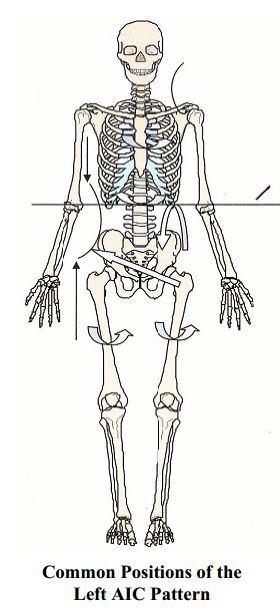
Say we prescribe a 30 second stretch on each side for the psoas. What does that do? Well, it gains us a new range of motion BUT you have not changed your tissue. Research shows that the minimum amount of time for you to achieve real tissue change is two minutes. This isn't to say that stretching for 30 seconds does nothing; however, it's going to take far longer doing that way. So my first recommendation here is to stretch the areas that need it for two minutes at a time.
OK, so now you've stretched each psoas for two minutes each and you now have tissue change on both sides. You now have this brand new range of motion in your hips. Congratulations! Now what are you going to do with it? The next teaching point comes from the brain.
Your brain, over time, develops movement patterns. It learns how to move. Yay for you that you have a new range of motion, but once you get up and start moving, your brain is still going to go back to the movement patterns it knows. You need to tell the brain that this new range is acceptable.
You need to own the new range. So after you stretch, you have to include some stability exercises in order to own this new range. For the psoas, I like to include dead bugs directly after stretching.
We now have a new range and some neuromuscular facilitation in this area. Now we're moving towards real change. Staying with the psoas example, I now want to be able to move through this new range. The psoas, when tight is going to restrict hip extension. Now that I have a freed up psoas, I want to move in and out of hip extension to further enhance the movement pattern. The glutes will now work more effectively and your brain is going to start understanding the new limits of your movement. For this aspect, I like to do glute bridges.
The last point I want to make is that we need to make sure we are encompassing all aspects of the joint so that they can all work in conjunction to generate the most possible change. The last area I target is the hamstrings. I want the hammys to be strong so they can anchor the pelvis down from the rear. This is going to provide some resistance for the psoas' natural inclination to tighten up. For this, I do a 90/90 hemi-bridge while squeezing a medicine ball to activate the adductors which will further anchor the pelvis down.
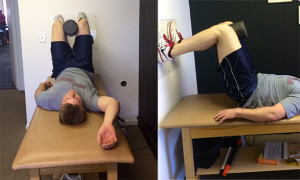
At the end of the day, everything that you do is going to produce some level of adaptation but it is very important to know that when you're trying to improve mobility/flexibility, there is a heck of a lot more that is going on than simply just a need to stretch the muscle.
Sean Light is a Strength and Conditioning Specialist (CSCS) and Performance Exercise Specialist (PES) specializing in injury prevention and performance training for professional-level baseball players.
Currently, Light works as a Strength and Conditioning Coach with the Arizona Diamondbacks.
Light holds a Bachelor's Degree as well as a Master's Degree in Sports Performance and Injury prevention. He is a Level 2 Certified Strength & Conditioning Coach in the Functional Movement Systems (FMS). He also holds certifications in Pelvic Restoration, Myokinematic Restoration, and Postural Respiration through the Postural Restoration Institute (PRI).
Light is a 2010 graduate of Quinnipiac University in Hamden, Connecticut where he was a three-year letter winner as a member of the Bobcat Division 1 college basketball team. While at Quinnipiac, Light helped record the most wins in school history as well as advance to the Northeast Conference Conference Tournament Championship Game and the NIT and CIT postseason tournament.
Previously, Light has spent time working with the New York Yankees and the Quinnipiac University Strength and Conditioning Department.
