

Integrating the Frontal Plane in Hockey Training
The ability to develop force is crucial in the performance of any sport, and hockey is no different. Training to be able to develop more force into the ground (or the ice, in this case) and transferring forces (for shots, body checks, etc) more efficiently are huge components of a training program. Lifting weights will help you do just that. But if you stop and think about the common lifting exercises, you notice one thing; those exercises do in fact increase your ability to develop force, but they almost all do so in the sagittal plane.
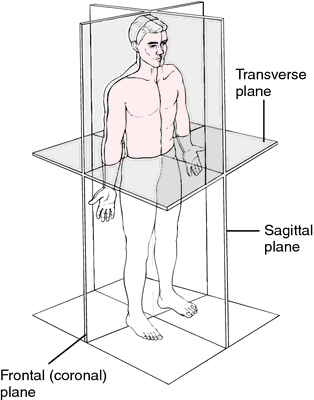
Conventional Lunges, Squats, Deadlifts, 1-Leg Squats and the like all increase our ability to develop force in the sagittal plane. And you notice the same thing about certain power development exercises like the Olympic lifts. There is nothing wrong with that, as this is usually in the same plane that our body is required to develop force in different athletic endeavours (running, jumping, etc). But in most athletic situations, the body is required to develop (or absorb) forces in different planes of motion, as when we change direction, shuffle or pivot. Hockey is no different, as you need to do all of these same multi-directional movement patterns on the ice. However, what really differentiates hockey from other sports is that the skating stride is multi-planar (you never push straight back when you skate) compared to a running or sprinting motion in which your body moves mostly in the sagittal plane. There is a big frontal and transverse plane component to the skating stride. Just think about how much abduction and external rotation occurs at the hip during the stride (frontal and transverse planes) and the rotation of the torso (transverse plane). Because of that, and because hockey is a multi-planar sport, being efficient at developing force in all planes is a very important aspect of being quick and powerful on the ice. In this article, I'll address training the frontal plane, as this is often an overlooked aspect in traditional strength and conditioning programs.
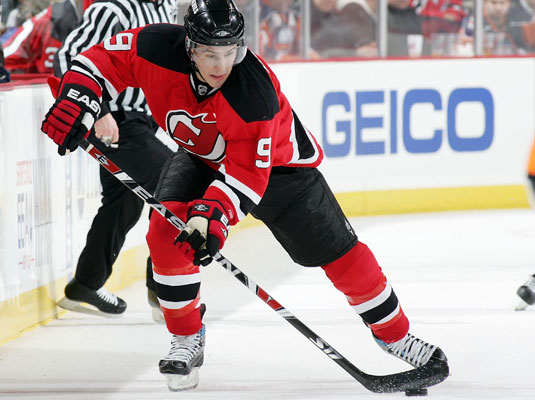
Notice the lateral movement (abduction) in the skating stride
There are different options to address the development of force in the frontal plane in a hockey training program. But before going any further, it is worth mentioning that exercises that help develop strength and power in the frontal plane are more complex and more difficult to perform correctly compared to the more common lifting exercises. Therefore a player should have a good mastery of the main lower body exercises and a decent level of strength before attempting to include some frontal plane exercises in his/her program. Because of the lateral nature of these exercises, there is a higher risk of injury in the hips and especially in the knees if there is not a significant amount of strength present in the hip musculature, and specifically the abductor muscles of the hip.
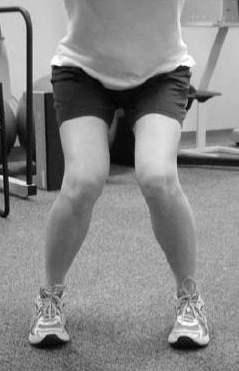
If you can't control this with an exercise in the sagittal plane, it's going to get pretty ugly in the frontal plane.
That being said, here are some different ways to include frontal plane action in your program that will help you or your athletes develop force more efficiently in the frontal plane.
Power Development Exercises
Power development exercises usually include variations of plyometrics, med ball throws, Olympic lifts and the like. I can think of many reasons off the top of my head why it would be a bad idea to try and replicate an Olympic lift variation in the frontal plane; and most med ball throw exercises would fit better under the transverse plane category, in my opinion. So that leaves us with plyometric exercises to develop power in the frontal plane.
The lateral bound is a very good exercise to help develop power in the frontal plane:
If you want to progress from the lateral bound to an exercise using some level of resistance, you can use a band-resisted lateral bound:
But an exercise doesn't have to be purely in the frontal plane, to help develop power production in that plane. As I mentioned above, a skating stride is a multi-planar movement. Jumping and bounding exercises can be used different planes simultaneously. Diagonal bounds would be a good example:
These are really just a couple examples, and as long as it's safe, I really believe that your imagination is the only limit when it comes to plyometrics.
Strength Development Exercises
Things are not as simple when it gets to strength exercises. It's pretty tough to use a heavily loaded exercise in the frontal plane, without any risk of injuries. The lateral lunge is one of those exercises, in my opinion. I've seen a lot of people do it and I've tried it with athletes that I coached in the past, but to be honest I'm not a fan. With the players I was training at the time I felt like there was a very small number of players who could perform them perfectly without intensive coaching.
In my opinion, the most viable option remains the sled. Lateral sled drags are a tremendous exercise to help develop strength in the frontal plane; they're very efficient and also very safe to use. It's very hard to mess up a lateral sled drag, so the risk of injury is as low as any lifting exercise performed with good form. Here is a Lateral Sled Drag:
But my favorite one is the Lateral Sled Drag with a crossover step. You can load it quite a bit and the crossover motion replicates very closely what players do on the ice when they turn and change direction:
A Word on Injury Prevention
Being efficient at developing force in the frontal plane is crucial in hockey. But one thing that you need to always keep in mind when including frontal plane exercises in a hockey training program is that the lateral musculature of hockey players will always tend be “tighter” because of the nature of the sport. They already spend a ton of time on the ice and every skating stride increases the amount of stress that is put on the hip abductors and external rotators.
Just like you want a field athlete to have a balance between the anterior and the posterior chain when training in the sagittal plane, you want the same balance between the hip abductors and adductors in the frontal plane. It's no wonder why players have so many groin problems; the adductor muscles are constantly stretched out and are usually much weaker than the abductors. So caution needs to be taken when including frontal plane exercises. The volume of these exercises should not be too high, and they definitely should not be performed year round. During the season, there is no need for added lateral work on the abductor muscles as the amount of time players spend on the ice is very high as is. Frontal plane exercises are a good inclusion in late off-season phases of training where you get more specific with your strength and conditioning program. It's also important to include some sort of work for the medial hip musculature (namely the adductor group) throughout the year to maintain optimal balance around the hips.
David is a strength and conditioning coach at Endeavor Sports Performance in Sewell, New Jersey. He has been working with a wide range of athletes from different sports including hockey, baseball, soccer and football who play at different levels ranging from high school to professional for the past 8 years. David received his Bachelor of Science degree in Kinesiology from the Université de Sherbrooke in Quebec, Canada. You can reach David through is website at http://DavidLasnier.com
