

Powerful Influence of Posture
As societal changes drive an increase in activities that revolve around sitting (e.g. video games, computer, driving, etc.), the impact of daily posture on sports performance is receiving an increasing amount of attention.
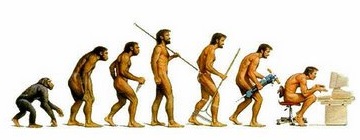
Most relevant to hockey players, the tight hip flexors and kyphotic thoracic spine that typify sitting can negatively impact a wide range of on-ice skills, including:
- Inhibiting full stride length
- Causing excessive movement at the lumbar spine
- Limiting rotational range of motion and power
In laymen's terms, these adaptations can cause a player to skate slower, have back pain, and have weaker shots. Typically, these sitting-related changes are described in the sagittal plane, overlooking transverse and frontal plane adaptations that are also relevant. I recently had an opportunity to study the Postural Restoration Institute's Myokinetic Restoration Course, which expands on precisely this gap: the comprehensive functional influences of anatomical imbalances and how they interact with posture to influence performance.

The course highlighted the fact that, anatomically, we all have inherent imbalances. Notably, we have a liver on the right, but not the left, which helps position the right diaphragm, which is stronger than the left. Because of this imbalance in diaphragm strength, there is a tendency for the spine to rotate more toward the right than the left. This drives what the PRI refers to as the Left AIC (Anterior Interior Chain) pattern, which causes the left pelvis to anteriorly tilt and internally rotate. In this position, the left hip is in a relative position of abduction and external rotation; the right hip is in a relative position of adduction and internal rotation.
The implications of this pattern for hockey players are substantial. As the hip capsule adapts to these altered positions of “neutrality” the body must find alternative ways to achieve desired ranges of motion. For example, the skating stride requires significant hip extension and external rotation. Because the left hip is already in a state of abduction and external rotation, to achieve more will require compensatory forward movement of the femoral head (weakening the anterior hip capsule, which can cause groin pain), and/or causing the left pelvis to grind up against the sacrum (left SI joint pain). Similarly, the right hip is already in a position of adduction and internal rotation so to achieve more will place excessive stress on the anterior/superior hip labrum and/or increase separation of the right pelvis from the sacrum (right SI joint pain).
The presence (or lack thereof) of this pattern can be determined by using two pretty simple tests: An Ober's Test to assess hip adduction ROM, and a Thomas Test to assess hip extension ROM. The presence of an dominant left AIC pattern manifests through a lack of adduction on the left side. If there is full hip extension on that same side, there is a good chance that there is excessive anterior hip capsule laxity on that side as well.
Ober's Test
Interestingly, viewing the body through this “lens” may explain why we see a higher prevalence of specific hip injuries on certain sides. For example, with the left hip in a relative position of abduction and external rotation, the adductors/internal rotators are placed at excessive length. During repetitive skating strides that necessitate further abduction and external rotation, it's reasonable to expect that the poorly positioned adductors/internal rotators would become overworked and eventually begin to tear. The most frequently strained “groin” muscle in hockey players? The adductor longus, an adductor and internal rotator.
Naturally, almost every injury is multi-factorial issue, and therefore cannot be pinned with one individual cause. Coach Boyle once said that, “If all you have is a hammer, everything will look like a nail.” PRI's Myokinetic Restoration Course provided another frame through which to view human movement, another tool for the box.
