

How to Effectively Return to the Ice After Time Off: COVID Case Study
On Ice Return to Sport: Plan versus Reality
The end of a calendar year is always a time of reflection. Although many of us would like to forget much of 2020 and shift our focus to 2021, taking time to step back and evaluate how things have unfolded is incredibly valuable. Although COVID has been a difficult journey for most in sports performance and athletics, I do believe many positives have emerged.
A major discussion topic within sport performance during the summer was ensuring that a safe Return to Sport (RTS) plan was in place for September, as most athletes had gone without competing or practicing for the longest period of time across their careers. The uniqueness of the COVID situation helped initiate open conversations between sport and S&C coaches on strategic pre-season loading of volume and intensity.
Within hockey, teams either ended their season in early March or had playoff runs cut short due to the lockdown. Skating during the late spring and summer was minimal to none for most which created tremendous concerns of higher than normal hip/groin injury risk when players returned in the fall. This meant that there was a necessity for hockey and S&C coaches to collaborate on creating integrated off- and on-ice loading plans that returned players to normal in season skating loads while minimizing injury risk.
COVID Return to Sport Plan
Below I will outline the process our Women's hockey coach and I underwent to create our initial RTS plan. I'll highlight some key aspects that were emphasized while executing the RTS plan and compare the planned loads to the training loads that were actually achieved.
In early August, our coach and I began by examining the recommended best practices from the NSCA (1,2), the information we knew at the time, and the unknowns to shape the framework of the microcycles and mesocycle for our 5-Week RTS Plan (Table 1).
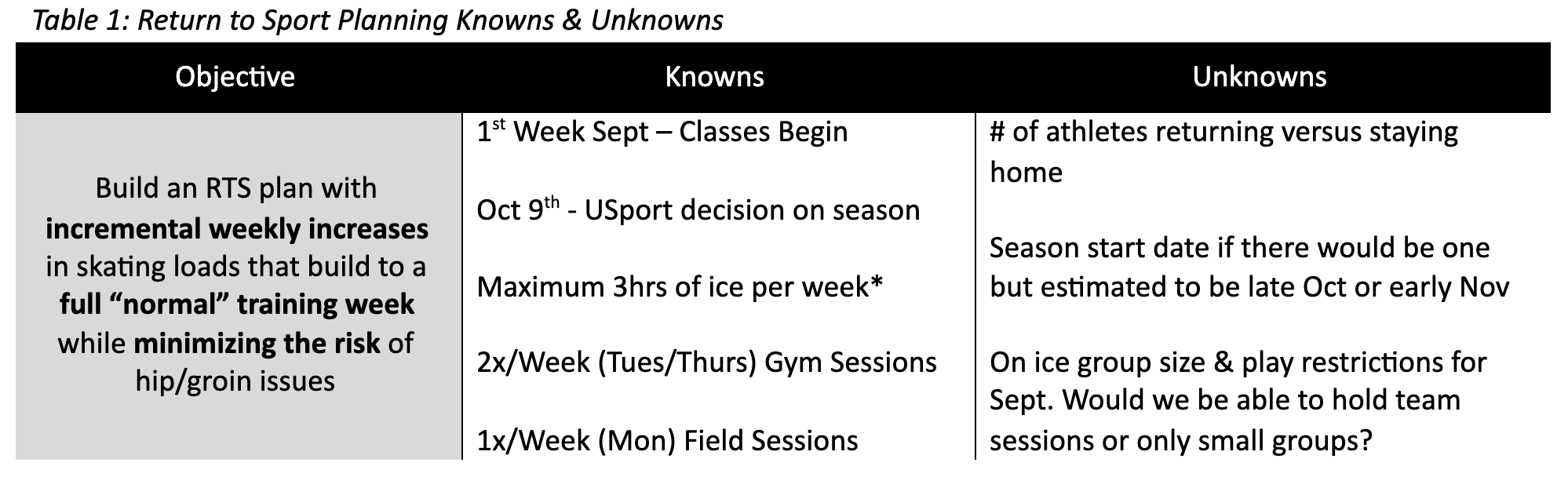
*An important consideration for our specific context is the lack of a rink on campus. We book ice at a public arena, meaning there is minimal flexibility in scheduling, and budget plays a role in the amount of ice we can book. We were budgeted a maximum of 3 x 1hr slots per week to use within our plan.
Create the Plan: Start at the End
The intent was for Week 5 to closely represent a full, “normal” pre-season microcycle (Table 2). We began there and worked backwards to Week 1.
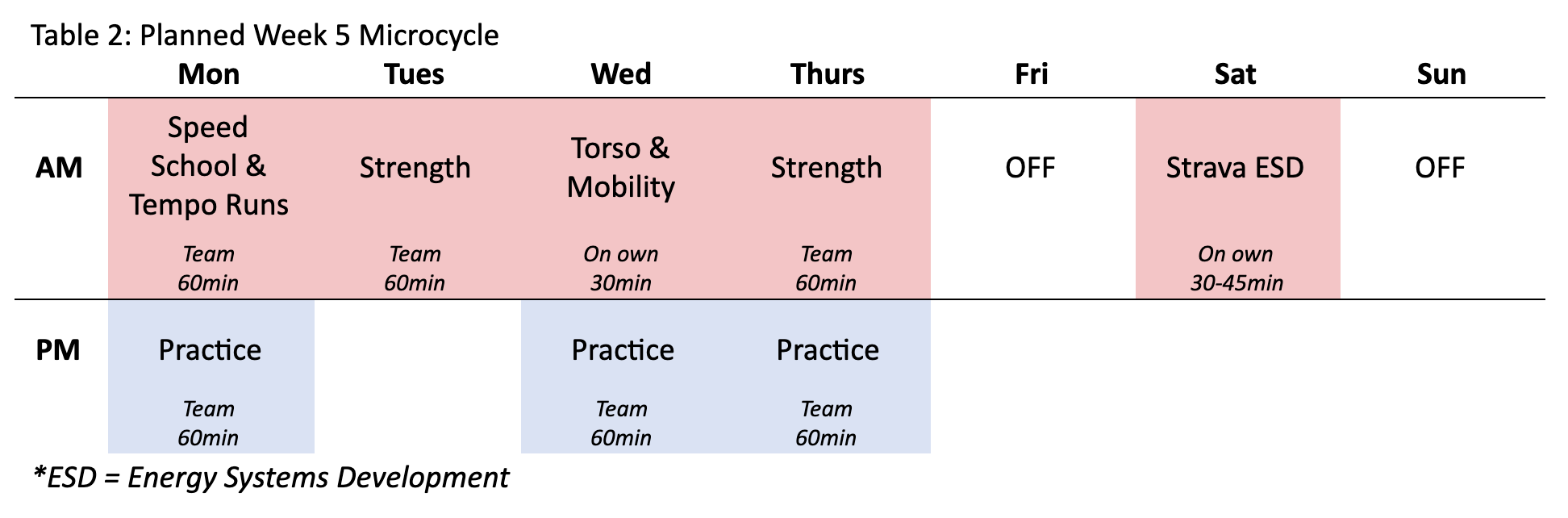
We wanted to include two days off and decided to separate them with our Saturday Strava ESD challenges we had run through the summer. The goal was to keep the athletes in a routine of competing on the weekends in case a season was approved and the team would have Saturday games.
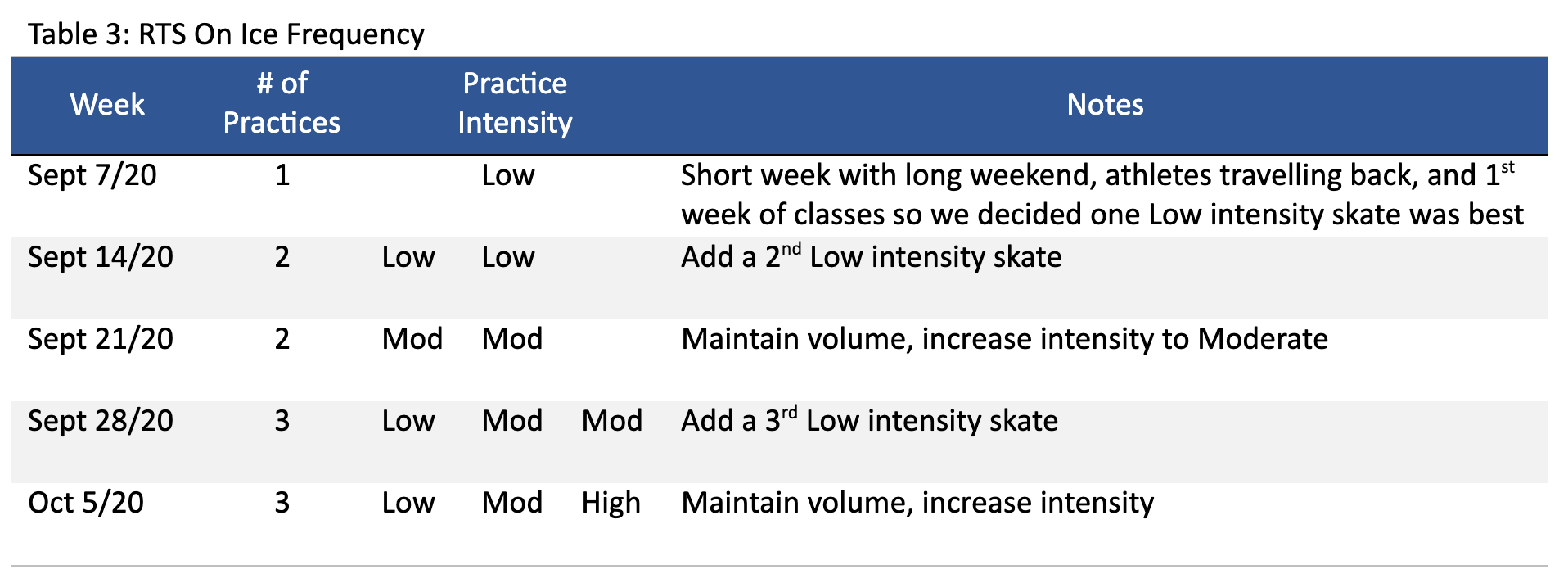
To build up to three practices we took the approach shown in Table 3. To gauge session intensity we used a 1-10 scale based off of the players' predicted rate of perceived exertions (RPE) where we categorized 1-5 as “Low”, 6-7 as “Moderate,” and 8-10 as “High.”
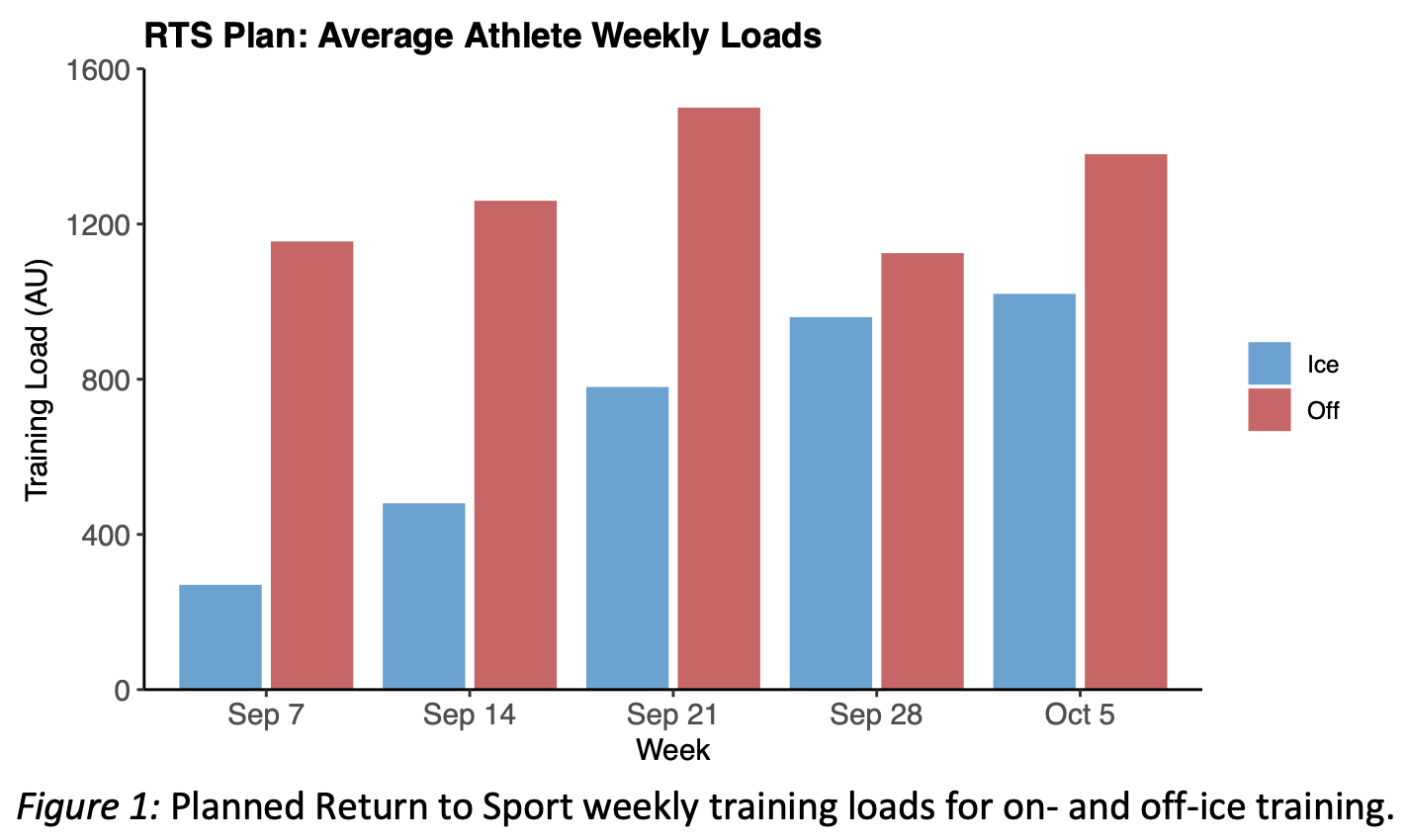
Off the ice the plan was to transition from bodyweight to gym-based strength training and maintain moderate volumes of speed and tempo work. We would gradually increase loads the first three weeks and deload Week 4 when the third practice was introduced (Figure 1).
Execution: Bringing the Plan to Life
Communication and collaboration between our coach, the athletes, and myself were prioritized throughout the RTS. Athletes were presented the RTS plan in August to ensure they understood the purpose and principles behind it. We encouraged daily feedback and conversations on how they were handling the loads on and off the ice. Our goal was to have the athletes take ownership and be active contributors to the process.
To quantify the loads we used sessional RPE (sRPE). Athletes completed RPE questionnaires through Microsoft Forms after each off and on ice session. Sessional RPEs were calculated by multiplying RPE by session duration in minutes.3 I monitored the loads and provided individual reports to the coach and players allowing everyone to visualize the work being performed each week.
Additionally, it enabled me to get a general comparison of the pattern and magnitude of loads we had planned versus those that actually occurred (Figure 2).
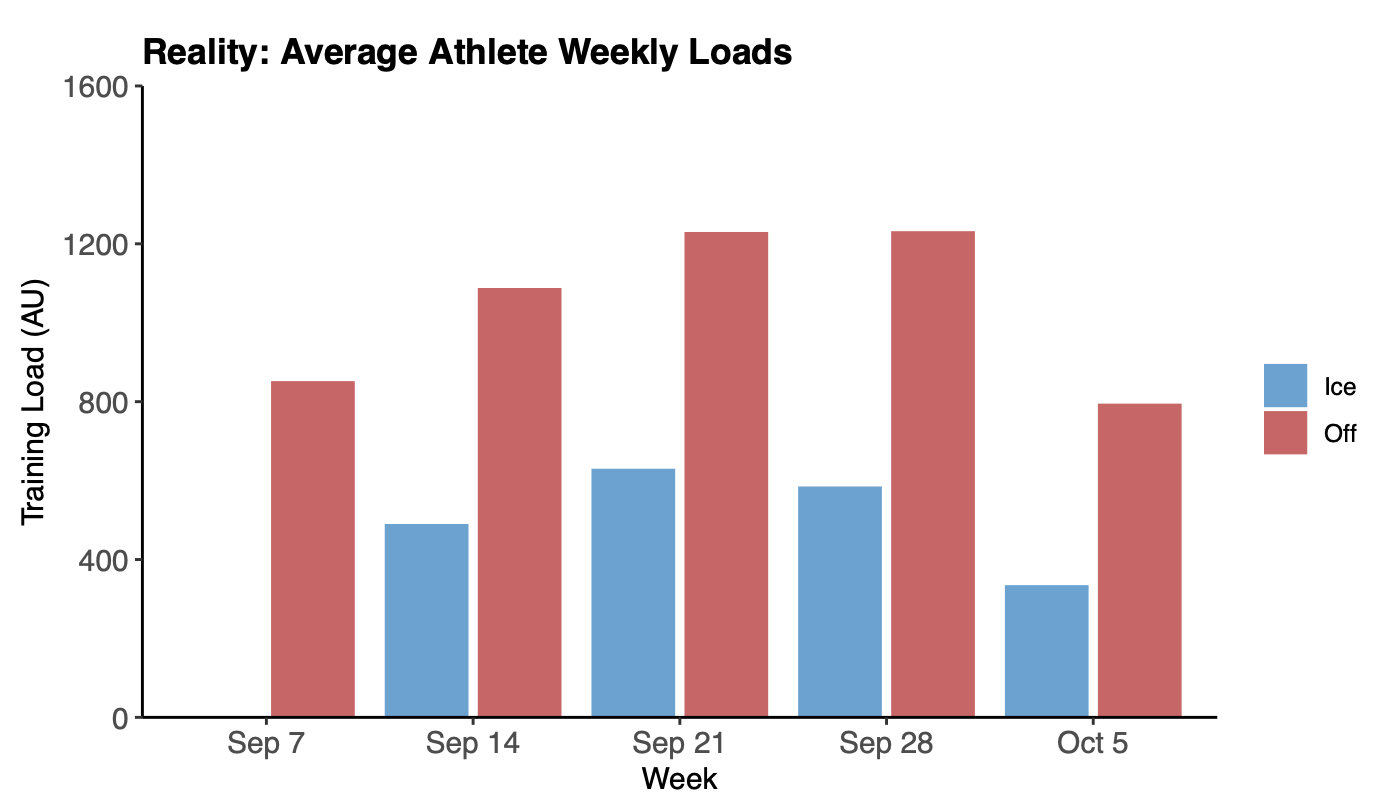
Figure 2: Comparison of the planned (light) versus actual (dark) training loads that were achieved across the 5-week Return to Sport plan.
The Reality Show: Compare and Contrast
We can notice some differences between the plan and reality. The magnitudes of the actual on-ice loads are non-existent the first week and minimal in the final week. We can also see the magnitudes of the actual loads are lower overall compared to the plan. A pattern of incremental increases across the weeks remained but to a lesser extent compared to the plan.
ON ICE LOADS
The variation in on-ice loads was predominantly driven by uncontrollable factors that arose.
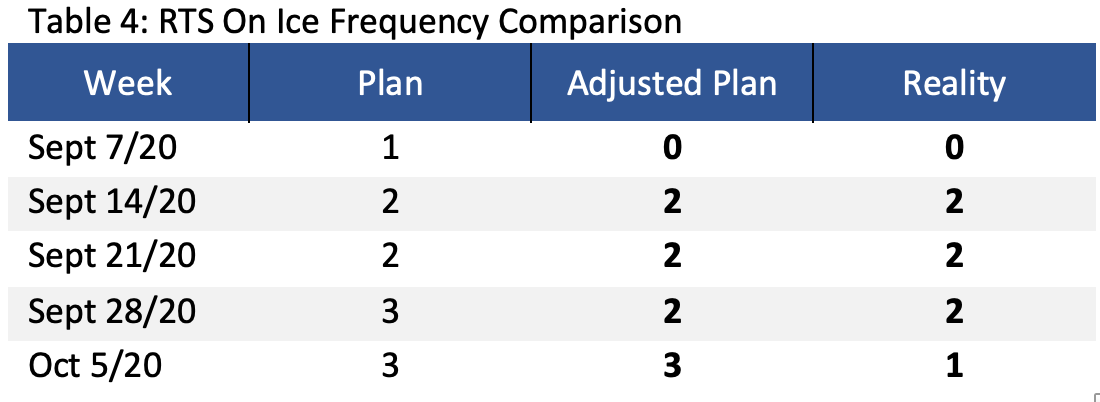
Week 1 we had planned for a single ice session to get a Low intensity exposure. Because of the uncertainty around COVID, most athletes decided to delay their return for 1-2 weeks. With very few athletes on campus for Week 1, we decided to not practice and bank the ice time for later.
Now we had a decision to make for Week 2 where we had originally planned two practices. Did we want to remove one of those ice sessions and shift the RTS schedule back one week or did we proceed with two and manage the intensity? We went with the latter. We removed the third session from Week 4 meaning the new frequency looked like the “Adjusted Plan” in Table 4.
Our head coach did a fantastic job of gradually increasing the intensity of the practices each week. The goal was to slowly increase the mechanical skating load and work completed within a session as the team progressed through the RTS.
Initial low-intensity practices were flow-based, minimized the amount of stops and starts, and used stationed skill work with moderate to long rest periods between stations. As the team progressed through the RTS, the intensity was slowly increased by using more drills that included stops and starts, shorter rest periods between skill stations, and included competition-based drills. Due to COVID restrictions, we were unable to use traditional battle drills, small area games, or scrimmages to increase intensity. Instead, we incorporated races, spaced games of tag with sticks, and mirror drills to hit our targeted intensities for the session.
Week 5 did not play out as anticipated. We unfortunately had to shut the team down and isolate after Monday's sessions. We were disappointed to have our final week cut short, but COVID is our current reality and it has the tendency of throwing plans on their head.
OFF ICE LOADS
We were able to achieve the same pattern of incremental loading through Weeks 1-3 as planned, however we can see the variation in Weeks 4 and 5. As outlined, we had planned three ice sessions that week but adjusted to two. Since their RPE scores from previous sessions were lower than I predicted and their weekly countermovement jumps were trending well, the players appeared to be tolerating the loads without any issues heading into Week 4. I decided to run a heavy load week with a planned deload Week 5.
Critical Analysis: Did we succeed?
Our objective was to execute a progressive 5-week loading plan within our contextual constraints that returned athletes to normal levels of skating load while minimizing the risk of hip/groin issues. We were successful in having no players or goalies with hip/groin issues and felt like we were in a good spot prior to being shut down.
The fact that the team completed the amount of mechanical work we had targeted off- and on-ice at a lower RPE than predicted suggests that the athletes tolerated the loading extremely well. Full credit to the group, they were exceptionally diligent with their summer training, had built up high chronic loads off ice, and arrived fit in September. After a summer of training at home doing split squat ISOs and hanging towels off doorhandles, being back playing hockey and training with their friends likely made the hard work feel a bit easier as well!
Did we hit our plan exactly? No, but we followed appropriate loading principles when forced to adjust. Reality rarely allows for perfect execution of plans. Part of the process is making decisions along the way to optimize the short- and/or long-term outcomes given whatever constraints the current situation presents.
Final Thoughts on Our Return To Sport Process
As I alluded to earlier, COVID has allowed for more productive conversations with sport coaches on volume, intensity, and loading. Our Women's hockey coach was already dialed in to loading concepts prior to COVID, however communication and execution of the RTS has spurred curious and thoughtful questions from the athletes. They now feel more a part of the plan than ever, which has set some meaningful cultural infrastructure for our program moving forward. So, thank you COVID for that! Most of the rest…. not so much.
Vicki Bendus, MSc, CSCS, Current PhD Student
Lead Sport Performance Coach, Men's & Women's Hockey/Soccer, Brock University
Lead Strength & Conditioning Coach, Canada's National Women's Development Team
Twitter: @VickiBendus
Instagram: @VickiBendus
